The Olympic Media dossier
1956: Melbourne
22 November-8 December
US television networks, recognising the potential audiences (and therefore advertising revenue) that the Games might attract, demanded free access on a par with radio and print media. This was a shift from a previous willingness to pay modest fees, prompted by the current debate about the introduction of pay TV, to build which potential operators were expected to offer large sums for sports rights. To avoid bidding wars, the networks argued that sport was news and thus should be freely covered. The American president of the International Olympic Committee, Avery Brundage, opined that the Games could continue to survive without television, as they had for 60 years.
The Melbourne Organising Committee (MOC) decided to sell exclusive rights to Associated Rediffusion, one of the new commercial (ITV) television broadcasters for £25,000. AR arranged a sponsorship deal with Westinghouse worth $500,000 for a series of US network nightly reports. Before the deal could be announced at a conference on 5 November 1955, the US networks poached AR's agent in Melbourne, who cancelled the deal. The BBC and NBC on behalf of the other US networks led a campaign of protests about allocating exclusive rights. The Melbourne Herald, which was an investor in the new Melbourne commercial television franchise HSV-7, threatened negative coverage.
In April 1956, the BBC and the two Australian cinema newsreel companies (Australian Movietone and Cinesound Review Newsreel), acting also on behalf of the US networks, proposed to the MOC that they should have three free minutes a day. But when the time came to ratify the agreement, the networks had decided on three different three-minutes segments a day under their own editorial control, rather than the MOC's. The IOC and MOC stood firm, partly on the grounds that more extenive television coverage would undermine the audience for the official feature-length film to be produced by Australian film-maker Peter Whitchurch, and no agreement was reached.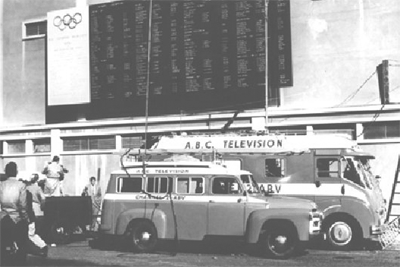
In the end, local television coverage is achieved. GTV Channel 9, not due to go on air until the following January, rushes its preparations and begins 'test transmissions' in time for the Games. Ampol agrees to sponsor coverage, paying A£1,000 to the IOC and A£8,000 to GTV. The Australian Broadcasting Commission (ABC) began television transmissions on 5 November in Sydney and 19 November in Melbourne and also took up the opportunity. [Photo source: ABC]
International television coverage was minimal but the issue of the value of the Games had been brought into the open. For the 1960 Games official selling of rights was introduced.
The official film is available on video.
 Olympics index
 Change index